The Full Story
Earthing Tai Chi Development Archive
2026 Update: Building a Bridge Between Modern Life and Traditional Practice
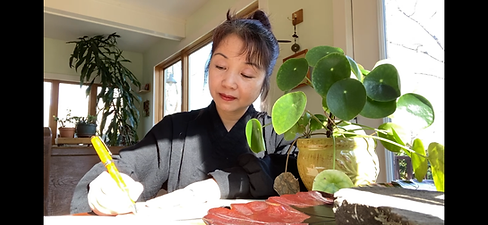
A Personal Note
When I created Earthing Tai Chi in 2023, I was responding to a question that had been growing through years of teaching:
How can traditional practice remain meaningful and accessible within the realities of modern life?
Many people genuinely want to learn.
They understand the value of slowing down.
They appreciate the health benefits of Tai Chi.
Yet modern schedules often make traditional training difficult.
Work changes.
Family responsibilities arise.
Life moves quickly.
I wanted to create a realistic pathway that would allow more people to experience the benefits of traditional practice without requiring them to immediately commit to the training schedules that were common in previous generations.
Earthing Tai Chi began as my attempt to answer that question.
The Original Vision
When I first designed the project, my goal was relatively straightforward.
I wanted students to be able to learn the foundational framework of the system within approximately twenty hours of study.
Historically, students often trained with their teachers for hundreds or even thousands of hours.
Modern life rarely allows that level of commitment at the beginning.
I believed that if people could experience the foundations in a manageable format, many would discover the value of continuing their practice.
Over time, I found that students entered the project with very different motivations.
Some wanted a seasonal wellness experience.
Some were searching for healthier habits.
Some wanted a lifelong practice.
Some hoped to deepen their understanding of traditional arts.
One structure could not serve all of these needs equally well.
What I Learned Between 2023 and 2026
As the project continued to grow, I noticed something important.
The challenge was not simply teaching Tai Chi.
The challenge was helping modern people create enough space in their lives to experience it.
Even a commitment of a few hours each month proved difficult for many students.
This observation led me to reconsider how the learning experience was organized.
Rather than expecting everyone to follow the same schedule, I began exploring multiple rhythms of participation.
The 2026 Evolution
The most significant change in 2026 was the shift from a single course structure to a seasonal learning pathway.
Instead of one entry point, students could now participate through several formats:
-
Foundation Training Programs
-
Experience & Review Programs
-
Guided Practice Sessions
Each format serves a different purpose.
Each supports a different stage of learning.
Together they create a more flexible and realistic pathway for modern students.
Seasonal Learning
Nature moves through seasons.
Human life does as well.
Some people have time to study in spring.
Others become available during summer.
Others begin in autumn.
Rather than viewing these differences as obstacles, I chose to design opportunities that allow students to enter, pause, return, and continue according to the realities of their lives.
This idea eventually became one of the guiding principles of the project.
Learning does not always happen in a straight line.
Sometimes growth happens through returning.
Tai Chi is not something to finish. It is something to return to.
Each return deepens the practice, and each season offers a new beginning.

Modern Paths and Traditional Paths
One of the most important lessons I learned through this process is that modern and traditional approaches do not need to compete.
They can support one another.
Earthing Tai Chi was created to provide accessible entry points for modern students.
At the same time, I continue to preserve more traditional forms of study for those who wish to pursue the art in greater depth.
Some students thrive within seasonal programs.
Others prefer long-term private instruction and consistent weekly study.
Both pathways have value.
The modern path helps people enter.
The traditional path helps people deepen.
Together they help preserve the living tradition.

Why Guided Practice Sessions Were Added
Another observation emerged through teaching.
Many students completed foundational training and wanted to continue practicing.
What they needed was not necessarily more information.
They needed repetition.
Consistency.
Community.
A regular opportunity to practice.
Guided Practice Sessions were created to meet that need.
These sessions emphasize practice rather than instruction.
Students already familiar with the foundational sequence can return, refine, and strengthen what they have learned.
Looking Forward
This archive exists to document the ongoing evolution of the project.
It records observations, adjustments, lessons learned, and the thinking behind future developments.
The goal is not merely to create courses.
The goal is to explore how traditional arts can continue serving people in a changing world.
Earthing Tai Chi will continue to evolve.
The goal was never to fit people into a fixed way of learning.
The goal was to let the practice find a natural place within their lives.
Future updates will document that journey.
— Jing
Founder and Teacher
Tao Tai Chi Studio
June 24, 2026

August 2026 Update:
Developing Course Three
as a Continuing Path
As Earthing Tai Chi continued to develop, I found that the distinction between foundational learning and deeper exploration needed to become clearer.
Course One and Course Two remain accessible to students at different levels who wish to establish and strengthen their Tai Chi foundation.
Course Three has gradually taken a different role.
It is not intended to be a required course that every student must complete. Instead, it is an opportunity for students who feel ready to continue exploring Tai Chi more deeply.
From Foundation to Deeper Exploration
In 2026, I further developed Course Three as:
Tai Chi Comprehensive Conditioning & Development
The intention is to bring together several aspects of Tai Chi practice that are often taught separately:
-
solo practice;
-
partner practice;
-
stepping;
-
body mechanics;
-
Qi Gong;
-
basic applications;
-
and progressive study of Yang Style Tai Chi.
Rather than organizing these elements as unrelated subjects, Course Three explores how they can support one another through gradual practice and deeper physical understanding.
A movement may be studied through repetition, breakdown, body mechanics, application, partner practice, and eventually connection within a longer form.
This approach reflects an important principle of Earthing Tai Chi:
The goal is not simply to learn more movements, but to understand more deeply what we are practicing.
A Continuing Program Rather Than a Fixed Course
Another important development was the decision to treat Course Three as an ongoing learning environment rather than a fixed-duration course.
The use of 12-hour and 24-hour training frameworks is intended to support realistic commitment and the development of consistent practice.
These numbers are not intended to define the beginning or end of learning.
A student may begin when the timing is appropriate, develop through one training stage at a time, and continue beyond the initial framework if the practice remains meaningful.
This allows the structure of the program to provide direction without becoming rigid.
Learning Conditions Matter
As the program developed, I also became more attentive to the conditions in which partner-based practices are introduced.
Some aspects of Tai Chi involve physical contact, greater interaction, and a deeper understanding of body mechanics and martial principles.
For these practices, the quality of the learning environment matters.
Students’ experience, interests, intentions, ability to cooperate, and willingness to support one another all contribute to whether a particular form of practice is appropriate.
For this reason, areas such as Push Hands, Tai Chi Sword, and Tai Chi Fan are not treated as requirements that every student must complete.
They may become appropriate areas of longer-term study when the students and learning conditions come together naturally.
Planning Without Rigidity
This stage of development also clarified how I want commitment and flexibility to work together.
A useful plan should encourage action and consistency, but it should also leave room for the realities of life.
Students may plan a period of training, practice consistently, adapt when circumstances change, and return to practice when the timing becomes appropriate.
In this sense, flexibility is not intended to replace commitment.
Flexibility is in service of consistency.
This principle connects the practical structure of the program with the broader philosophy of Tai Chi: remaining stable without becoming rigid, responding to change without losing direction, and taking action when the conditions are right.
Looking Ahead
Course Three will continue to develop.
Yang Style Tai Chi is expected to be an important area of study during the coming years, while other aspects of Tai Chi may develop according to the interests, experience, and learning conditions of future students.
I do not want to define the entire future of the program in advance.
The structure provides a direction.
The practice reveals the next step.
This continues the central idea behind Earthing Tai Chi:
Create enough structure to support practice, and enough flexibility to allow the practice to remain alive.
August 18, 2026
Jing Shuai
Founder and Teacher
Tao Tai Chi Studio